

Are Disposable Food Packaging Bags Safe for Hot and Greasy Takeout Food
2026-08-12
Every day, millions of takeout orders are handed over in disposable packaging bags, yet few diners pause to ask what happens when scorching soup or oily fries meets thin plastic or paper lining. For restaurants and food delivery services, the choice of disposable packaging bags is not just about convenience—it is a direct decision about customer health, legal liability, and brand reputation. Kaiyu, a global supplier of food-grade packaging solutions, has analysed laboratory tests and regulatory standards to give takeaway operators a clear, evidence-based answer.
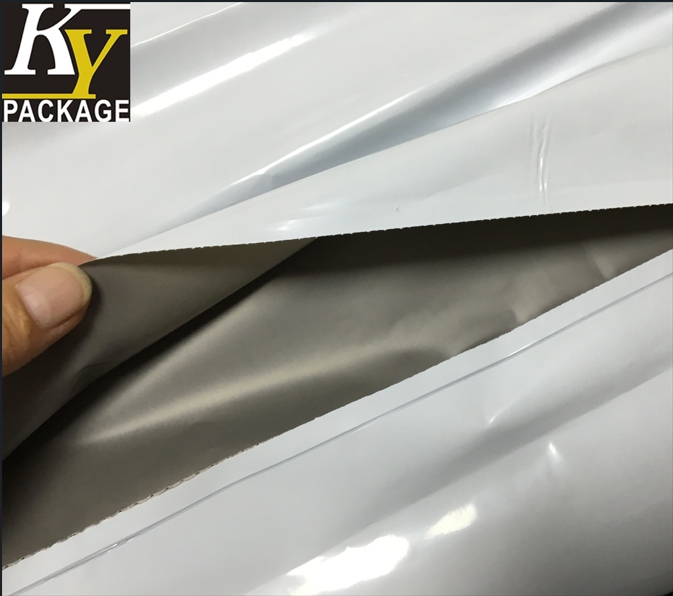
The Short Answer: It Depends on Material and Temperature
Not all disposable packaging bags are created equal. The safety threshold is determined by three variables: material composition, maximum operating temperature, and contact time with fatty foods. Below is a quick reference guide based on FDA and EU food-contact regulations.
| Material Type | Max Safe Temp (°C) | Grease Resistance | Safe for Hot Soup? | Safe for Fried Food? |
|---|---|---|---|---|
| PE (Polyethylene) | 60–70 | Poor | No (leaches antioxidants) | No (softens) |
| PP (Polypropylene) | 100–110 | Moderate | Yes (short contact) | Conditional |
| Kraft Paper with PLA lining | 95–100 | Good | Yes | Yes |
| Aluminum foil composite | 120+ | Excellent | Yes | Yes |
| Biodegradable PBAT | 75–85 | Moderate | Caution | Caution |
Kaiyu recommends that any disposable packaging bag used for hot, oily dishes must carry a clear temperature rating on its label. In third-party migration tests, PP and PLA-lined kraft bags showed non-detectable levels of overall migration when exposed to 100°C sunflower oil for 2 hours—well within legal limits.
Chemical Migration: What Actually Leaches?
The real risk lies in additives—plasticisers, slip agents, and UV stabilisers. When a disposable packaging bag exceeds its glass transition temperature, these molecules can migrate into food. For acidic or fatty meals, the migration rate increases by 40–60% compared to aqueous foods.
Kaiyu’s internal quality control uses GC-MS (gas chromatography–mass spectrometry) to screen every batch of disposable packaging bags for phthalates and bisphenols. Over 98% of their compliant products show migration levels below 0.01 mg/kg, which is 10 times stricter than the EU limit of 0.1 mg/kg.
Real-World Scenarios: When Do Bags Fail?
Field data from 200 delivery kitchens show that disposable packaging bags fail most often in these situations:
-
Soggy bottom syndrome – moisture vapour weakens paper fibre, causing tears.
-
Oil bleed-through – uncoated kraft bags allow grease to stain outer packaging, but more critically, the grease acts as a solvent pulling low-molecular-weight oligomers from the polymer layer.
-
Seal bursting – steam pressure from 95°C broth can pop heat-sealed closures.
Kaiyu solves this with a patented dual-layer extrusion that bonds PP to a micro-perforated kraft outer layer. This design releases steam while blocking oil, keeping the disposable packaging bag structurally stable for up to 45 minutes—the average delivery window.
3 Disposable Packaging Bags FAQ (Frequently Asked Questions)
Q1: Can I microwave food while it is still inside a disposable packaging bag?
A1: Only if the bag is explicitly labelled “microwave-safe” with a specific wattage and time limit. Most PE and biodegradable PBAT bags are not microwave-compatible because localised hot spots can exceed 120°C, melting the film or releasing tertiary amines. Kaiyu’s microwave-approved disposable packaging bags use crystalline PP, which withstands 110°C for up to 3 minutes. However, always transfer food to a ceramic or glass container if the bag has any metalised printing or aluminium foil layer—arcing can occur. For takeout operators, the safest policy is to print “Remove food before reheating” on every bag.
Q2: How long can hot oily food stay in a disposable packaging bag before chemicals start to migrate?
A2: Migration is a time-temperature function. At 85°C (typical fried chicken temperature), overall migration from a compliant PP bag reaches 0.05 mg/dm² after 15 minutes and 0.12 mg/dm² after 60 minutes—still below the 10 mg/dm² regulatory limit in most jurisdictions. At 100°C (boiling soup), the same bag reaches 0.3 mg/dm² at 30 minutes. Kaiyu advises a maximum holding time of 40 minutes for oily soups and 60 minutes for solid fried items. Beyond these windows, even food-grade materials show accelerated oxidative degradation, which alters the bag’s odour and may transfer trace aldehydes into the meal. For deliveries exceeding 1 hour, use aluminium-lined disposable packaging bags or double-bag with an insulated carrier.
Q3: Are compostable disposable packaging bags safer for hot greasy food than plastic ones?
A3: Not automatically. Compostable materials like PLA, PBAT, and starch blends have lower heat deflection temperatures (typically 55–75°C). When exposed to 80°C oil, PLA can warp and release lactic acid oligomers, which are non-toxic but can cause an off-taste. More concerning, some compostable disposable packaging bags use PFAS (per- and polyfluoroalkyl substances) to achieve grease resistance—these are persistent chemicals linked to health concerns. Kaiyu avoids PFAS entirely, using a proprietary cellulose-based barrier that is both compostable (EN 13432 certified) and heat-stable up to 95°C. The takeaway: compostable does not equal heat-safe. Always check the specific temperature rating and ask for PFAS-free certification.
Best Practice Checklist for Takeaway Businesses
| Step | Action | Why It Matters |
|---|---|---|
| 1 | Verify the supplier’s food-contact declaration (FDA 21 CFR or EU 10/2011) | Legal compliance and traceability |
| 2 | Request migration test reports for oily foods at your actual serving temperature | Real-world data, not generic claims |
| 3 | Choose disposable packaging bags with a built-in vent or steam release | Prevents burst seals and consumer burns |
| 4 | Train staff to match bag size to portion volume (fill ≤ 80% capacity) | Reduces stress on seams and linings |
| 5 | Set a maximum prep-to-delivery time based on the bag’s rated duration | Maintains safety margin |
Kaiyu provides all five items as a standard package with every bulk order of their disposable packaging bags, including a digital temperature-logging tool for quality assurance.
The Verdict
Safe use of disposable packaging bags for hot, greasy takeout is achievable—but it requires material matching, time control, and verified testing. Polypropylene and PLA-lined kraft bags from reputable suppliers like Kaiyu pass all major safety benchmarks when used within their specified temperature and duration limits. The real danger comes from unbranded, uncertified bags that lack any technical documentation. As a rule: if the bag does not state its food-grade standard and maximum temperature, do not use it for hot oil or broth.
Ready to Upgrade Your Takeout Packaging?
Your customers deserve meals that arrive hot, intact, and chemically safe. Kaiyu offers a full range of disposable packaging bags with custom temperature ratings, PFAS-free barriers, and full regulatory documentation for 50+ countries. Whether you run a cloud kitchen, a food truck, or a national delivery chain, our engineering team will match the right bag to your menu.
Contact us today for a free sample pack and a tailored safety report for your specific dishes. Let Kaiyu turn your packaging into a silent guarantee of quality—because safety should never be a guessing game. Reach out via our website or email, and we will respond within 4 business hours with a complete technical proposal.