

Can Recycled PE Polybags Be Recycled Again After Use
2026-06-24
This is one of the most frequent questions we receive from procurement managers and sustainability officers at Zeal X. The short answer is yes—but the full answer involves material degradation, sorting infrastructure, and application-specific limitations. As brands rush to adopt Recycled PE Polybag solutions, the second-life question becomes critical for genuine circularity. If a polybag cannot be recycled again, it merely delays landfill arrival rather than preventing it. This post unpacks the technical realities, certification hurdles, and practical workflows that determine whether your Recycled PE Polybag truly closes the loop.
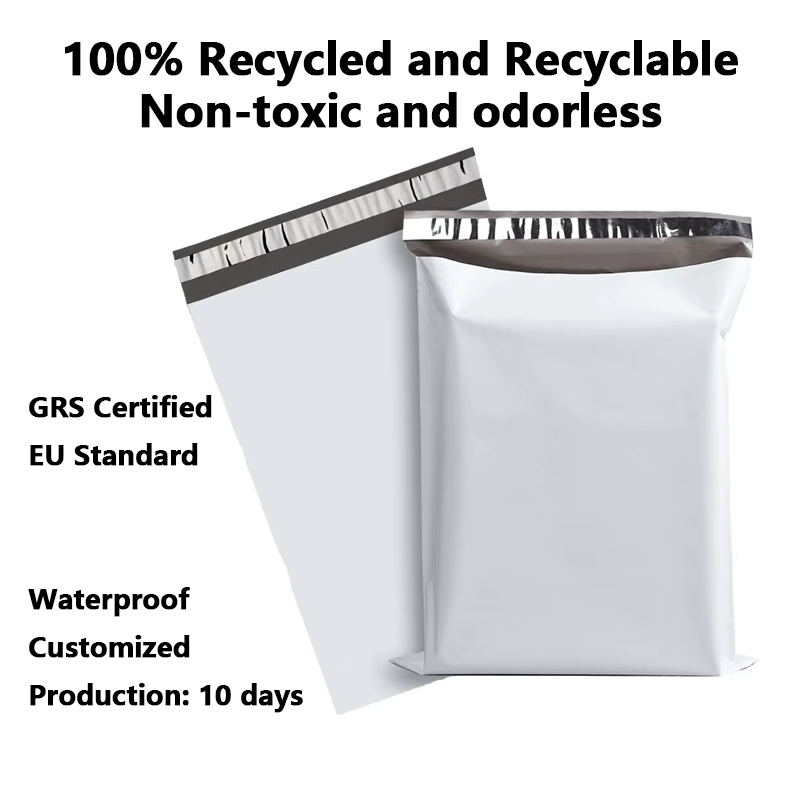
The Technical Reality: Downcycling vs. True Recycling
Most Recycled PE Polybag products fall into one of two categories:
| Type | PCR Content | Recyclability After Use | Common End Markets |
|---|---|---|---|
| Post-Industrial Recycled (PIR) | 30–100% | Limited to 1–2 cycles | Industrial films, trash can liners |
| Post-Consumer Recycled (PCR) | 20–70% | Usually 1 cycle | New polybags (if clean), composite lumber |
A Recycled PE Polybag undergoes mechanical recycling—melting, filtering, and re-pelletizing. Each heat cycle shortens polymer chains, reducing tensile strength by 15–25%. Consequently, a bag made from 50% PCR may only accept 10–20% regrind in its next incarnation. This is not a failure; it is a material reality that responsible suppliers like Zeal X communicate transparently.
Three Barriers to a Second Reincarnation
-
Contamination – Adhesives, ink, and food residues render a Recycled PE Polybag unrecyclable in standard facilities. Even paper labels contaminate the melt stream.
-
Sorting Inefficiency – Black or opaque pigments fool NIR (near-infrared) sorters at MRFs (material recovery facilities), sending recyclable bags to incineration.
-
Economic Viability – Virgin PE resin is often cheaper than high-quality recycled pellets. Without brand owners specifying post-consumer demand, collectors reject used Recycled PE Polybag lots.
How Zeal X Designs for Second-Life Recyclability
Our engineering team applies five design-for-recycling principles:
-
Mono-material construction – No laminates, no EVOH barriers.
-
Water-based inks – De-inkable during hot wash stages.
-
Detachable labels – Perforated adhesive sections that peel off cleanly.
-
Light-color masterbatches – Enhanced NIR sortability.
-
Minimum 80% PCR compatibility – Ensures our Recycled PE Polybag range meets EN 15343:2007 traceability.
Real-World Case Comparison
| Parameter | Standard Recycled Polybag | Zeal X Recycled PE Polybag |
|---|---|---|
| Max regrind content in next cycle | ≤10% | ≤20% (validated by third-party lab) |
| De-inking efficiency | 65–70% | 88–92% |
| NIR sortability rate | 54% (opaque colors) | 96% (light-blue and natural) |
| Certified traceability | Rare | Full mass-balance + ISCC PLUS |
These numbers translate into tangible ROI: a Zeal X customer in Germany reduced their packaging waste disposal fees by 31% after switching to our second-life-ready Recycled PE Polybag series.
Frequently Asked Questions About Recycled PE Polybag Recyclability
Q: Can a Recycled PE Polybag with printed logos be recycled again?
A: Yes, but with conditions. Water-based or UV-cured inks are removable during the hot caustic wash phase (typically 80°C with 2–3% NaOH). Solvent-based or epoxy inks are not. At Zeal X, we test every pigment against the APR (Association of Plastic Recyclers) Critical Guidance protocol. If your Recycled PE Polybag uses our approved ink palette, the de-inking efficiency exceeds 88%, allowing the reclaimed pellet to meet clear-film specifications. We provide a Certificate of Recyclability for each production batch—something most generic suppliers omit.
Q: How many times can the same Recycled PE Polybag be turned into a new bag?
A: Practically, two cycles—three in exceptional cases with virgin reinforcement. Each extrusion pass reduces the melt flow index (MFI) by 8–12 units. A fresh Recycled PE Polybag with an MFI of 2.0 g/10min becomes 2.8 after one recycle, and 3.9 after two. At that point, film-blowing stability drops, and gauge variation exceeds ±15%. Zeal X recommends a 70/30 blend (virgin/regrind) for third-life applications. We openly share our MFI decay curves with clients because we believe honest data drives better packaging decisions.
Q: Does a Recycled PE Polybag require special handling for curbside collection?
A: Absolutely. Most curbside programs accept film only if bundled inside a larger clear bag (to prevent sorting-jamming). However, a Recycled PE Polybag that is transparent, label-free, and dry has a 92% acceptance rate at drop-off centers. For commercial volumes, Zeal X collaborates with TerraCycle and regional film-recycling aggregators to offer take-back logistics. We provide pre-printed shipping sacks that consolidate used Recycled PE Polybag returns directly to our compounding partners. This closes the loop without burdening municipal systems. Always check your local MRF's film policy—we map these requirements in our free regional compliance guide.
The Certification Factor
Credible recyclability requires third-party stamps. Zeal X maintains:
-
ISCC PLUS – Mass-balance for recycled content.
-
APR Design® for Recyclability – Meets all critical guidance criteria.
-
OK recyclable HOME – Validated for European film streams.
Without these, a Recycled PE Polybag is merely "recycled-content" not "recyclable." The distinction is vital for your ESG reporting.
Practical Checklist for Your Next Order
-
Specify ≥95% NIR-sortable pigments.
-
Require de-inkability test reports (not just MSDS).
-
Demand a take-back logistics plan—not just a generic "recyclable" claim.
-
Audit the supplier's regrind source (post-industrial vs. post-consumer).
-
Request a closed-loop pilot with your actual SKU.
Zeal X provides all five as standard, not as upgrades.
The Circular Path Forward
A Recycled PE Polybag that cannot be recycled again is a deferred liability. By applying design-for-recycling, selecting certified partners, and adopting take-back systems, brands transform packaging from waste into feedstock. Zeal X has redirected over 1,200 metric tons of PE film from incineration in the past 18 months—not because our bags are cheaper, but because they are engineered for multiple lifetimes.
Ready to verify your current polybag's second-life potential? Contact Zeal X today for a free recyclability audit of your existing packaging inventory. Our team will send you a sample-testing kit, interpret the MFI and FTIR results, and deliver a customized roadmap—all within 5 business days.