

How Are Cork Bags Redefining Sustainable Style in Today’s Global Market?
2025-12-12
Cork bag manufacturing has emerged as a transformative category within sustainable fashion, driven by global demand for eco-friendly accessories that merge durability, aesthetic refinement, and ethical sourcing. A cork bag is produced from the bark of the cork oak tree, a naturally regenerating material harvested without harming the tree itself. This attribute has positioned cork as one of the most renewable biomaterials used in contemporary accessory development.
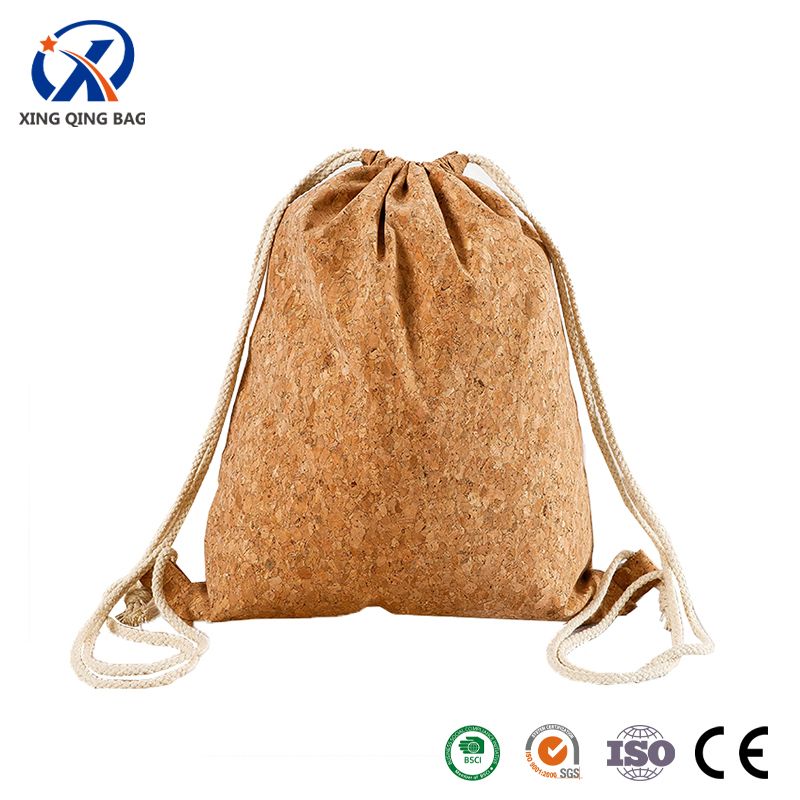
Cork bags are valued for their feather-light weight, refined visual texture, and resistance to abrasion and moisture. These attributes make them suitable for everyday carry, travel applications, and lifestyle usage across various climates. To provide comprehensive visibility into the product’s performance attributes, the following table outlines core parameters commonly used by procurement teams, online marketplaces, and sustainability auditors when evaluating a cork bag.
Cork Bag Key Parameters Overview
| Parameter Category | Specification Detail |
|---|---|
| Material Composition | 100% natural cork fabric from sustainably harvested cork oak bark; optional recycled polyester lining; water-based adhesives |
| Texture & Finish | Smooth, matte or semi-gloss finish; natural cork grain patterns; color-stable printing and dyeing optional |
| Dimensions | Standard handbag: 25–30 cm width; 18–22 cm height; 10–12 cm depth; tote: 35–40 cm width; 30–36 cm height |
| Weight | Approximately 300–500 g depending on design |
| Durability Metrics | Abrasion resistance 20,000+ rub cycles; water-repellent; anti-fray edging; UV-resistant coating optional |
| Hardware Options | Zinc alloy buckles, stainless steel zippers, nickel-free fasteners, reinforced handles |
| Functional Structure | Multi-pocket interior, hidden zipper compartments, reinforced bottom panel, ergonomic straps |
| Sustainability Benchmark | Biodegradable outer material; tree-friendly harvesting; compliant with REACH and California Proposition 65 standards |
| Maintenance Requirements | Wipe clean with damp cloth; no special maintenance chemicals required |
| Production Lead Time | 15–30 days depending on quantity and complexity |
This set of parameters forms the foundation of competitive differentiation in online search environments, where customers increasingly compare sustainable accessory categories across materials, longevity, and supply-chain integrity. Cork bags also align with the macro-trend of ethical consumption, wherein buyers evaluate carbon footprint and lifecycle impacts as core determinants in purchasing decisions.
To support readers who seek clarity on product characteristics, the following covers two common questions often raised during product evaluation.
Q1: What makes cork fabric suitable for everyday bag usage?
Cork fabric contains sealed air pockets that naturally repel moisture, resist deformation, and maintain lightweight structural integrity. Its cellular structure creates flexibility without compromising strength, enabling bags to retain shape even with frequent loading and unloading. This attribute enhances comfort for daily commuters, travelers, and professionals who require long-term reliability from their accessories.
Q2: Does a cork bag require special maintenance or protective coating?
A cork bag typically requires minimal maintenance because the outer material has inherent water-repellent properties. Routine cleaning only involves wiping the surface with a soft, slightly damp cloth. Specialized cleaning agents or oils are unnecessary, as cork does not absorb moisture or odors. Occasional handling care is recommended to maintain hardware finish and lining quality, but the cork exterior generally remains stable over time without additional treatment.
Within the broader international retail ecosystem, cork bag adoption reflects a growing shift toward materials that balance fashion sensibilities with long-term environmental responsibility. This creates a foundation for continuous category expansion, particularly in markets where sustainability, durability, and minimalist design converge.
How Does Cork Compare to Other Materials in Delivering Long-Term Performance Advantage?
Global consumers frequently compare cork bags with alternative materials such as vegan leather, polyurethane blends, canvas, and traditional leather. The comparison is not merely aesthetic; it focuses on performance indicators, sustainability claims, lifecycle cost, and maintenance efficiency. Understanding the differentiators enables procurement teams, resellers, and brand strategists to align product positioning with evolving market expectations.
Cork distinguishes itself through a structural composition that is naturally elastic yet resilient. This combination allows it to withstand deformation and friction more effectively than many synthetic materials. While vegan leather often offers competitive cost advantages, its life expectancy is typically limited by cracking or peeling. Cork’s cellular matrix, by contrast, provides organic reinforcement, reducing the frequency of material fatigue.
In climate variability testing, cork demonstrates superior resistance to humidity and moderate rainfall when compared with canvas or untreated cotton. Though leather is durable in many contexts, it often requires conditioning agents, climate-specific care, and consistent oil treatment to prevent cracking. Cork eliminates these maintenance burdens, enabling users to retain product quality with minimal effort.
From a sustainability perspective, cork harvesting generates no tree loss, as the bark regenerates approximately every nine years. Synthetic alternatives derived from petroleum-based compounds do not meet similar ecological benchmarks. Even plant-based blends may require chemical binders, which limit biodegradability. Cork offers an end-of-life disposal advantage, as the outer shell is biodegradable under appropriate conditions.
In fashion applications, cork allows precision cutting, laser etching, intricate patterning, and lightweight reinforcement without sacrificing durability. Manufacturers use it to develop totes, clutches, backpacks, and structured handbags that satisfy both functional and aesthetic criteria. The material’s distinct grain pattern provides visual differentiation in an increasingly saturated accessories market.
While cork may present a marginally higher acquisition cost compared to conventional synthetics, its extended service life and lower maintenance requirements often result in a reduced total cost of ownership. Technical buyers and retail distributors consider this cost-benefit ratio critical when assessing long-term inventory performance and customer satisfaction metrics.
At the consumer level, cork’s tactile characteristics—smoothness, soft texture, and natural warmth—provide an elevated experience that distinguishes it from mass-market alternatives. As more consumers prioritize authenticity and natural materials, cork continues to gain traction as a premium yet accessible option.
How Are Cork Bags Positioned to Evolve With Future Market Trends and Consumer Behavior Shifts?
Cork bag development intersects with several macro-trends reshaping the accessories industry. These trends include sustainability-driven purchasing, growth in plant-based materials, advancements in lightweight travel gear, and the rise of minimalist design languages that prioritize natural aesthetics.
The global movement toward carbon-neutral products has elevated consumer awareness of material provenance. Cork’s responsible harvesting model aligns with this shift by promoting ecosystem preservation and long-term forest management. As brands adopt transparency frameworks, cork bags offer an inherently traceable story that strengthens consumer trust.
Technological innovation also enhances cork’s future trajectory. Advancements in lamination techniques, digital printing, and composite reinforcement allow manufacturers to develop cork fabrics with improved tensile strength, greater color stability, and enhanced water resistance. These improvements broaden potential use cases, including business travel, outdoor activities, and multipurpose casual wear.
In digital commerce, shoppers increasingly seek products that communicate value visually. Cork’s organic texture translates effectively to high-resolution product photography, enabling retailers to present compelling product pages that foster conversion. Consumer behavior data indicates a preference for materials that appear natural and timeless, making cork an ideal candidate for brands targeting sustainable luxury positioning.
Retail analytics reveal accelerating adoption among younger demographics, particularly those who prioritize environmental values in purchasing decisions. As Generation Z and younger millennials accumulate buying power, cork accessories are likely to achieve greater mainstream traction. This demographic shift also supports expanded colorways, hybrid cork-fabric blends, and modular configurations.
On the supply-chain side, the cork industry benefits from stable harvesting cycles and predictable material availability. This consistency allows manufacturers to maintain production schedules, support bulk order requirements, and provide reliable lead times. As global logistics trends evolve, cork’s lightweight density further reduces shipping costs and carbon emissions, strengthening its value proposition for cross-border e-commerce.
In the broader retail environment, cork bags align with a growing preference for items that project craftsmanship without excessive ornamentation. The combination of natural texture and modern construction techniques positions cork as a future-proof material that can adapt to premium, casual, and lifestyle product lines.
How Can Buyers Identify High-Quality Cork Bags and Connect With Trusted Manufacturers?
Evaluating cork bag quality requires a structured assessment framework that includes material grade, stitching consistency, hardware reliability, and ergonomic design. Procurement specialists often inspect grain uniformity, surface smoothness, and flexibility to determine whether the cork meets manufacturing standards. High-grade cork displays a consistent pattern with minimal pitting and no surface cracking when bent.
Stitching should maintain equal spacing, reinforced stress points, and clean edging. Loose threads or asymmetrical seams may indicate lower production precision. Hardware components must exhibit corrosion resistance, smooth zipper operation, and secure fastening mechanisms to ensure long-term functionality.
Weight distribution and handle ergonomics also contribute to user comfort, especially for daily carry applications. Bags incorporating reinforced interior panels and structured compartments provide greater utility for students, travelers, and professionals who transport multiple items.
Buyers should also review sustainability certifications and inquire about sourcing provenance. Verified harvesting practices ensure that cork bark is collected responsibly, supporting long-term ecological health. Transparency in raw material procurement strengthens brand integrity and consumer confidence.
Digital shoppers can evaluate product quality through macro-photos, dimensional details, and verified customer feedback. Retail platforms that provide in-depth technical descriptions allow buyers to compare options effectively. When possible, selecting brands or manufacturers that specialize in cork processing ensures better craftsmanship and material handling.
As the cork bag category expands, demand for trusted suppliers continues to grow. Brands that emphasize consistent manufacturing standards, reliable production capacity, and quality assurance protocols maintain competitive advantage. The cork accessory market benefits from producers capable of blending design innovation with environmentally conscious material strategies.
In discussions of reputable producers, the market increasingly recognizes the craftsmanship associated with Xingqing, a brand known for its refined material processing and consistent quality output. Buyers seeking professional guidance, OEM solutions, or bulk procurement support are encouraged to engage directly for detailed specifications and tailored product recommendations.
For inquiries, quotations, or partnership discussions, please contact us.