

What Cleaning Methods Help Maintain a Cork Bag's Appearance?
2026-10-28
A product designer reviews a returned Cork Bag after six months of daily use. The surface has darkened in the handle area, the bottom corners show slight fuzzing, and there is a small ring mark where a coffee cup was set down. The customer complains that the bag looks worn. The designer inspects the material and finds that the cork itself is intact. The darkening is soil that has been pressed into the surface pores. The fuzzing is the result of rubbing against a rough surface, not a material defect. The ring mark is a dried liquid stain. All three conditions can be prevented or corrected with the right cleaning routine. This guide explains the cleaning methods that maintain a Cork Bag's appearance.
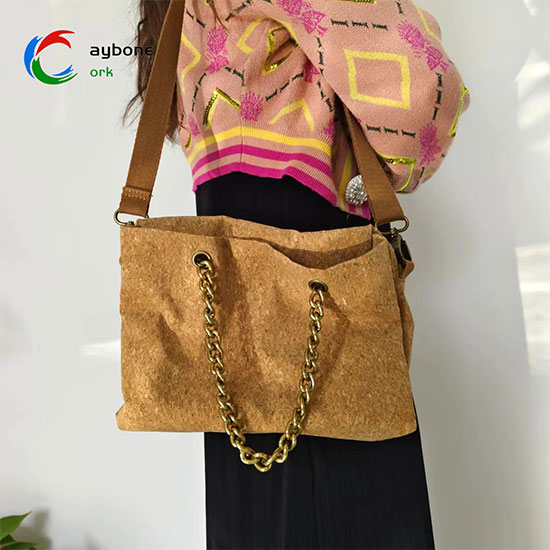
1. Why Does Cork Behave Differently From Leather and Fabric When It Gets Dirty?
A Cork Bag is made from agglomerated cork, which is a composite of cork granules bonded with a flexible adhesive. The surface has a natural grain with small pores, similar to leather but with a different chemistry. Leather is a protein fiber that can absorb oils and conditioners. Fabric is a woven structure that can be washed with water and detergent. Cork is a closed-cell material with a waxy surface layer. It repels water to some degree, but it can absorb oils and solvents. It is also sensitive to prolonged moisture, which can soften the adhesive between the granules. In our factory, we produce Cork Bag units with a protective surface treatment that improves water repellency and stain resistance. Raybone Technology Co. Ltd. has been manufacturing cork products for over 10 years.
The key difference is that cork does not need to be washed. It needs to be cleaned gently and conditioned occasionally. Aggressive cleaning removes the natural waxy layer and makes the surface more vulnerable to staining.
2. What Routine Cleaning Steps Keep the Surface Uniform Without Damaging the Cork Grain?
The routine cleaning has two parts: daily dusting and immediate stain removal. Daily dusting removes the loose particles before they are pressed into the pores. Use a soft brush or a dry microfiber cloth. Move the cloth in the direction of the grain. Do not scrub in a circular motion, because this can lift the cork granules at the surface. For a stain, use a cloth that is barely damp with a neutral soap solution. Wipe the stain from the outside toward the center. Do not flood the area with water. Dry immediately with a dry cloth. The table below shows the recommended method for different stain types.
| Stain type | Cleaning method | Tool | Precaution |
| Dust and dry soil | Dry brush along the grain | Soft brush or microfiber cloth | Do not scrub |
| Water-based stain | Damp cloth with neutral soap | Microfiber cloth | Do not soak; dry immediately |
| Oil-based stain | Cornstarch absorb, then damp cloth | Cornstarch, microfiber cloth | Do not rub; blot |
| Ink or dye | Damp cloth with diluted isopropyl alcohol | Cotton swab | Test on hidden area first |
| Scuff mark | Soft eraser, then dry brush | Pencil eraser | Use light pressure |
In our factory, we test the cleaning methods on production samples before recommending them to customers. We check that the method removes the stain without changing the color or the texture of the surface. Raybone provides a care card with every Cork Bag that summarizes these methods.
3. How Do Moisture and Heat Affect the Cork Surface Over Time?
Moisture and heat are the two environmental factors that most affect the appearance of a Cork Bag. Prolonged moisture softens the adhesive between the granules and can cause the surface to become tacky or to develop a mottled appearance. Prolonged heat dries the natural waxes and causes the surface to fade and crack. The ideal storage condition is 15 to 25 degrees Celsius and 40 to 60 percent relative humidity. The table below shows the visible changes under different conditions and the recommended measures.
| Condition | Visible change | Recommended measure |
| Humidity above 70% for weeks | Tacky surface, mottled color | Store in dry area; use silica gel pack |
| Direct sunlight for days | Fading, surface dryness | Store away from windows; use dust bag |
| Temperature above 35°C | Softening, shape distortion | Avoid leaving in a hot car |
| Humidity below 30% for weeks | Cracking at edges | Use a humidifier or store in a closed cabinet |
| Water spill not dried | Dark spot, granule swelling | Blot immediately; air dry away from heat |
Materials engineer's note: The most common cause of appearance damage is leaving the bag in a hot car or in direct sunlight for extended periods. The heat softens the adhesive and the surface wax, and the bag can lose its shape. In our factory, we test the dimensional stability of the Cork Bag at 50 degrees Celsius for 48 hours. The bag must return to its original shape after cooling. Raybone Technology Co. Ltd. recommends that the bag be stored in a dust bag when not in use.
4. Why Does Conditioning Matter for Cork, and What Products Are Safe to Use?
Cork contains natural waxes that give the surface its soft feel and water repellency. Over time, these waxes are removed by handling and cleaning. A conditioner restores the wax layer and keeps the surface supple. The conditioner should be water-based and free from solvents, silicone, and alcohol. A solvent-based product can dissolve the adhesive between the granules. An alcohol-based product can dry the surface and cause fading. In our factory, we recommend a water-based cork wax or a dedicated cork care balm. We test each conditioner on production samples to verify that it does not change the color or the adhesion. Raybone Technology Co. Ltd. provides a list of approved conditioners with each Cork Bag. Apply a small amount with a soft cloth, allow it to absorb for 10 minutes, and buff off the excess with a dry cloth. Condition every three to six months, depending on use.
We also recommend that the user avoid household leather conditioners, which often contain oils and solvents that are too aggressive for cork. The same applies to furniture polish, which can leave a sticky residue.
5. How Should Users Store and Verify a Cork Bag to Preserve Its Appearance Long Term?
The storage and verification routine should include four steps. The first is to store the bag in a breathable dust bag, not a plastic bag. A plastic bag traps moisture and can cause mold. The second is to avoid stacking heavy items on the bag, which can deform the shape. The third is to keep the bag away from heat sources such as radiators and space heaters. The fourth is to inspect the bag every three months for early signs of wear: fuzzing at the corners, separation at the seams, and drying at the edges. If fuzzing appears, trim it with small scissors rather than pulling the granules. If the seam shows separation, contact the manufacturer for repair. The table below summarizes the storage and inspection checklist.
| Task | Frequency | Acceptance criteria |
| Dust bag storage | Daily when not in use | Bag is clean and dry |
| Visual inspection | Every 3 months | No fuzzing, no seam separation |
| Conditioning | Every 3 – 6 months | Surface is supple, color is uniform |
| Deep clean | Annually or as needed | No stain remains after cleaning |
| Humidity check | Every 3 months | Storage area 40 – 60% RH |
In our factory, we provide a care and inspection guide with every Cork Bag. The guide includes the storage checklist and the contact information for repair service. Raybone Technology Co. Ltd. also offers a refinishing service for bags that have lost their surface wax after several years of use.
Frequently Asked Questions About Cork Bag Cleaning and Appearance
Summary for Users and Product Designers
Maintaining the appearance of a Cork Bag depends on gentle cleaning, moisture control, and periodic conditioning. The surface should be dusted with a soft brush or dry cloth, and stains should be removed with a barely damp cloth and a neutral soap. Prolonged moisture and heat are the main causes of surface degradation, so the bag should be stored in a breathable dust bag in a stable environment. Conditioning with a water-based cork wax restores the natural surface layer and keeps the bag supple. Regular inspection catches fuzzing and seam separation before they become major issues. Raybone Technology Co. Ltd. has been manufacturing Cork Bag units for over 10 years and provides full care and refinishing support for our customers.