

Article Summary: Brown Paper Lunch Bags are widely used for sandwiches, bakery products, snacks, takeaway meals, and everyday food service. Yet choosing a suitable bag involves more than checking its color or paper weight. Food type, grease, moisture, bag dimensions, loading conditions, printing, storage, and direct food contact all affect performance. This guide explains the practical specifications behind brown paper lunch bags and provides a useful framework for buyers, food-service operators, distributors, and packaging companies working with Zhejiang Qianlin Packaging Technology Co., Ltd..
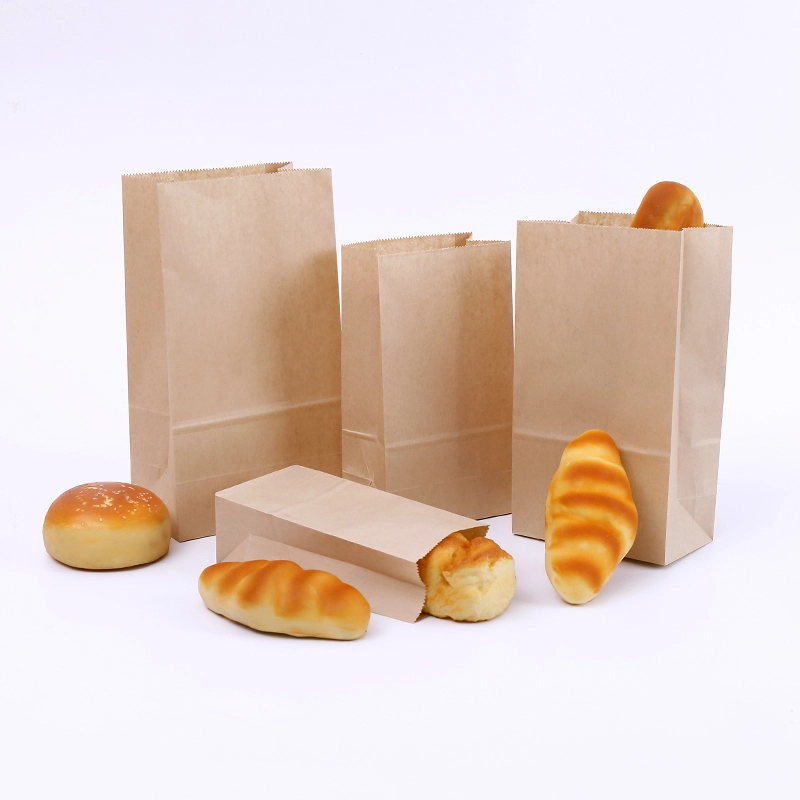
What Brown Paper Lunch Bags Are Designed to Do
Lunch packaging has a deceptively simple job. A bag needs to hold food securely, remain practical for staff to fill, protect the contents during transport, and present the product neatly when it reaches the customer. Brown paper lunch bags are popular because they combine a familiar natural appearance with a straightforward packaging structure.
For food-service buyers, however, appearance is only one part of the specification. A bag used for dry cookies has very different requirements from one carrying a warm sandwich, fried food, or several takeaway containers. A paper bag that performs well with one application may become soft, stained, or difficult to carry when exposed to oil, steam, condensation, or excessive loading.
Commercial paper packaging can also involve different levels of moisture and grease resistance. Industry product ranges commonly distinguish ordinary paper bags from grease-resistant and greaseproof-lined constructions because these structures are intended for different food conditions.
Which Paper Material Works for Lunch Bags
Brown paper lunch bags are commonly associated with kraft paper because kraft paper offers a useful balance between strength, appearance, printability, and cost. The natural brown surface also gives food packaging a simple, understated appearance that works well for cafés, bakeries, restaurants, grocery stores, and takeaway brands.
But “brown” describes the appearance rather than the complete material specification. The actual paper structure, basis weight, fiber composition, treatment, and intended food-contact application determine how the finished bag behaves.
| Material / Structure | Typical Advantage | Suitable Considerations |
|---|---|---|
| Natural brown kraft paper | Good general strength and recognizable natural appearance | Dry foods, sandwiches, bakery products and general takeaway use |
| Grease-resistant paper | Improved resistance to oil penetration | Foods containing moderate amounts of grease or oil |
| Greaseproof-lined paper | Additional internal barrier | Greasy or fried food applications where ordinary paper may not be sufficient |
| Coated paper structure | Can provide specific moisture or liquid resistance | Applications requiring a defined barrier rather than ordinary dry-food packaging |
Another important point is food-contact suitability. Brown color, kraft appearance, or higher GSM alone should not be treated as proof that a bag is suitable for every food application. Buyers should request documentation appropriate to the intended food-contact conditions and the materials used, including coatings, adhesives, and printing components where relevant.
Which Foods Need Additional Protection
The food itself is one of the most important inputs when specifying a lunch bag. Dry products usually place relatively low demands on the paper. Hot, greasy, wet, or freshly cooked foods create much more demanding conditions.
Dry and Low-Moisture Foods
Cookies, bread, dry pastries, packaged snacks, fruit, and similar products can often use a simpler paper structure. The main concerns are usually bag size, tear resistance, appearance, and ease of filling.
Warm Sandwiches and Bakery Products
Warm food can introduce condensation as temperature changes during storage or delivery. If the food also contains sauces, butter, cheese, or other oily ingredients, the bag may need more than basic paper strength.
Fried and Greasy Foods
French fries, fried chicken, burgers, pastries with oily fillings, and similar foods can expose paper to grease. This is where grease resistance becomes a separate specification from mechanical strength. A heavier paper may carry a larger load without necessarily providing better resistance to oil penetration.
Which Bag Size Fits the Actual Meal
Size affects both customer experience and packaging cost. A bag that is too small can crush food or make filling slow. A bag that is oversized consumes additional paper and may allow products to move around during delivery.
Rather than selecting a size from a generic chart, measure the actual food container or product footprint. For businesses serving several menu categories, it can be more practical to establish two or three standardized bag sizes instead of creating a separate size for every item.
| Application | Important Dimension | What to Check |
|---|---|---|
| Sandwiches | Width and opening | Easy loading without crushing the product |
| Bakery items | Width, height and gusset | Product shape and possible deformation |
| Takeaway meal boxes | Bottom dimensions and depth | Container stability and total load |
| Multiple snack items | Overall volume | Internal movement during transportation |
For a custom project, provide the supplier with the dimensions of the food or inner container, expected quantity per bag, approximate total weight, and whether the bag needs to stand upright or remain flat. This information makes the specification considerably more useful than simply stating “medium brown lunch bag.”
Which Strength Factors Matter During Handling
Lunch bags experience stress at several points: filling, lifting, stacking, transportation, and customer handling. The weakest point is not always the paper sheet itself. Seams, folds, bottom construction, handles, and glued areas can also determine whether the finished bag performs reliably.
For this reason, purchasing decisions should look beyond GSM. Paper weight is useful when comparing material specifications, but it does not describe every aspect of finished-bag performance.
- Paper basis weight: helps establish the material structure and general load capability.
- Tear resistance: matters when bags are repeatedly lifted or exposed to sharp container edges.
- Bottom construction: becomes particularly important when the bag carries heavier food containers.
- Seam strength: helps prevent opening along glued or folded areas.
- Handle construction: should correspond with the expected carrying load when handles are included.
- Humidity exposure: can reduce paper performance, particularly during warm-food delivery or damp storage.
For demanding applications, buyers should request finished-bag samples and test them using the actual containers and approximate load conditions. This is often more informative than judging the paper by touch alone.
Which Grease and Moisture Requirements Should Be Specified
Grease resistance and moisture resistance are related but should not be treated as identical requirements. A bag can be designed to resist oil while still having limited resistance to liquid water or condensation. The correct specification depends on the food and expected exposure.
Commercial packaging suppliers offer both grease-resistant paper and multi-layer greaseproof constructions for different food-service applications. Some product ranges specifically position grease-resistant paper for lightly greasy foods and inner greaseproof layers for more demanding fried-food applications.
For Lightly Greasy Food
A grease-resistant paper structure may be sufficient when the food contains limited oil and the contact time is short.
For Heavily Greasy Food
A greaseproof inner layer or another verified barrier may be more appropriate where significant oil contact is expected.
For Moist or Wet Food
Ask specifically about moisture resistance rather than assuming that grease resistance provides the same protection against water or sauces.
Which Printing Details Matter for Custom Bags
Brown paper provides a useful printing surface for businesses that want packaging to carry a logo, product message, store information, or brand graphics. The natural paper background can also be part of the visual identity rather than something that needs to be completely covered with ink.
For custom brown paper lunch bags, artwork should be prepared with the finished bag structure in mind. Printing close to folds, seams, handles, and bottom areas may require special consideration.
- Confirm the printable area before finalizing artwork.
- Keep important text away from folds and glued seams.
- Check whether the selected paper surface affects color appearance.
- Confirm the number of printing colors and required artwork format.
- Request a physical proof or production sample when color consistency is important.
- Ensure inks and other components are appropriate for the intended packaging application.
For food packaging, printing should be considered part of the overall material system rather than an isolated decoration. The intended food-contact arrangement and applicable market requirements should be discussed with the packaging supplier before mass production.
Which Specifications Should Buyers Confirm Before Ordering
A clear purchase specification prevents many problems that otherwise appear only after production begins. For distributors and food-service companies, the most useful approach is to turn the intended application into measurable requirements.
| Specification | Questions to Confirm |
|---|---|
| Material | What paper type and fiber structure are being used? |
| Paper weight | What GSM range is required for the intended load? |
| Food contact | Is the complete packaging construction suitable for the intended application? |
| Grease resistance | What level of oil exposure must the bag withstand? |
| Moisture resistance | Will the bag encounter condensation, sauces, or wet food? |
| Dimensions | What finished width, height, gusset, and opening are required? |
| Construction | What bottom, seam, handle, or closure structure is needed? |
| Printing | What artwork, colors, printable area, and finish are required? |
| Packing | How many bags per bundle or carton are required? |
| Quality inspection | Which appearance, dimensional, strength, and printing checks should be applied? |
This approach is particularly useful when sourcing at commercial volumes. It gives the manufacturer enough information to match the bag construction to the application instead of relying on an ambiguous product name.
Zhejiang Qianlin Packaging Technology Co., Ltd. can be included in the supplier evaluation process when buyers are developing brown paper lunch bag specifications, custom packaging requirements, or larger food-service packaging programs. For a production inquiry, providing the target size, material preference, application, estimated order quantity, printing requirements, and packaging method can make communication much more efficient.
Which Food-Service Applications Use Brown Paper Lunch Bags
Brown paper lunch bags are adaptable because the basic format can be adjusted according to the food, carrying requirements, and presentation goals. Common applications include:
| Industry | Typical Products | Main Packaging Concern |
|---|---|---|
| Cafés | Sandwiches, pastries, cookies, breakfast items | Easy filling and clean presentation |
| Bakeries | Bread, buns, croissants, baked snacks | Product protection and suitable dimensions |
| Fast-food restaurants | Burgers, fries, fried foods, meal combinations | Grease resistance and structural strength |
| Takeaway kitchens | Meal boxes, snacks, mixed food orders | Load capacity and delivery handling |
| Grocery stores | Prepared foods, bakery products, snacks | Versatility and efficient packing |
| Catering | Individual meals and event snacks | Consistent size, stacking, and transport |
The same brown paper appearance can therefore support very different packaging strategies. The important distinction is the internal specification rather than the visual label.
Frequently Asked Questions About Brown Paper Lunch Bags
Are brown paper lunch bags suitable for direct food contact?
They can be, when manufactured from materials and components appropriate for the intended food-contact application. Buyers should verify the complete packaging construction and relevant documentation rather than assuming that every brown kraft bag is food-contact compliant. Brown color and paper thickness alone do not establish food safety.
Does a heavier paper bag always have better grease resistance?
No. Paper weight and grease resistance describe different performance characteristics. A heavier paper may provide greater structural strength, while oil resistance depends on the paper treatment or barrier structure.
Can brown paper lunch bags be custom printed?
Yes. Custom printing can be used for logos, product information, brand graphics, store details, and other packaging messages. The printable area, ink system, artwork, and printing process should be confirmed before production.
What foods are suitable for ordinary brown paper bags?
Dry or relatively low-moisture products such as bread, cookies, packaged snacks, and many bakery items are common applications. Foods with substantial grease, liquid, or heat may require a more suitable barrier structure.
How can I choose the correct lunch bag size?
Start with the dimensions of the actual food or inner container. Consider the product width, height, depth, quantity per bag, and whether additional space is required for easy loading or removal.
What information should I send when requesting a quotation?
Provide the desired bag dimensions, material or paper preference, application, estimated quantity, printing requirements, grease or moisture resistance requirements, packing method, and destination market. A product sample or drawing can also help clarify the required construction.
Should samples be tested before a bulk order?
For a new specification, sample testing is strongly recommended. Use the actual food containers and approximate operating conditions to check fit, loading, handling, grease resistance, and overall appearance before approving mass production.
Need Brown Paper Lunch Bags for Your Packaging Program?
Every food product creates a slightly different packaging requirement. If you are sourcing brown paper lunch bags for a restaurant, bakery, café, catering business, distributor, or retail packaging project, a clear specification can help avoid unnecessary material costs and performance problems.
Zhejiang Qianlin Packaging Technology Co., Ltd. can discuss your required bag dimensions, paper structure, printing needs, food application, and order requirements to develop a packaging solution around your actual use conditions.
Send your product details and packaging requirements to contact us for further discussion and a suitable quotation.
Contact Us